Beef Wellington Recipe
If you’ve ever wanted to impress guests (or just treat yourself) to a show-stopping classic, this Beef Wellington Recipe is exactly what you need. Picture a perfectly seared tenderloin wrapped in a mushroom duxelles and prosciutto blanket, all encased in flaky, golden puff pastry. Trust me, once you nail this, you’ll have a restaurant-worthy dish right in your own kitchen. So grab your apron and let’s dive into a recipe that’s both elegant and surprisingly doable!
Why This Recipe Works
- Balance of Flavors: Combining earthy mushrooms, savory prosciutto, and tender beef creates a rich flavor profile that’s hard to beat.
- Perfect Texture: The crisp, golden puff pastry contrasts beautifully with the soft, juicy interior.
- Step-by-step clarity: The detailed instructions help even home cooks tackle this complex dish with confidence.
- Time-tested techniques: Searing the beef properly and chilling the wrapped tenderloin ensures juicy meat and a flaky crust every time.

Ingredients & Why They Work
This Beef Wellington Recipe brings together ingredients that complement each other perfectly — from the tenderloin that’s rich and tender to the mushroom duxelles that adds deep umami. When shopping, look for a nice center-cut beef tenderloin and a mix of mushrooms for depth of flavor.
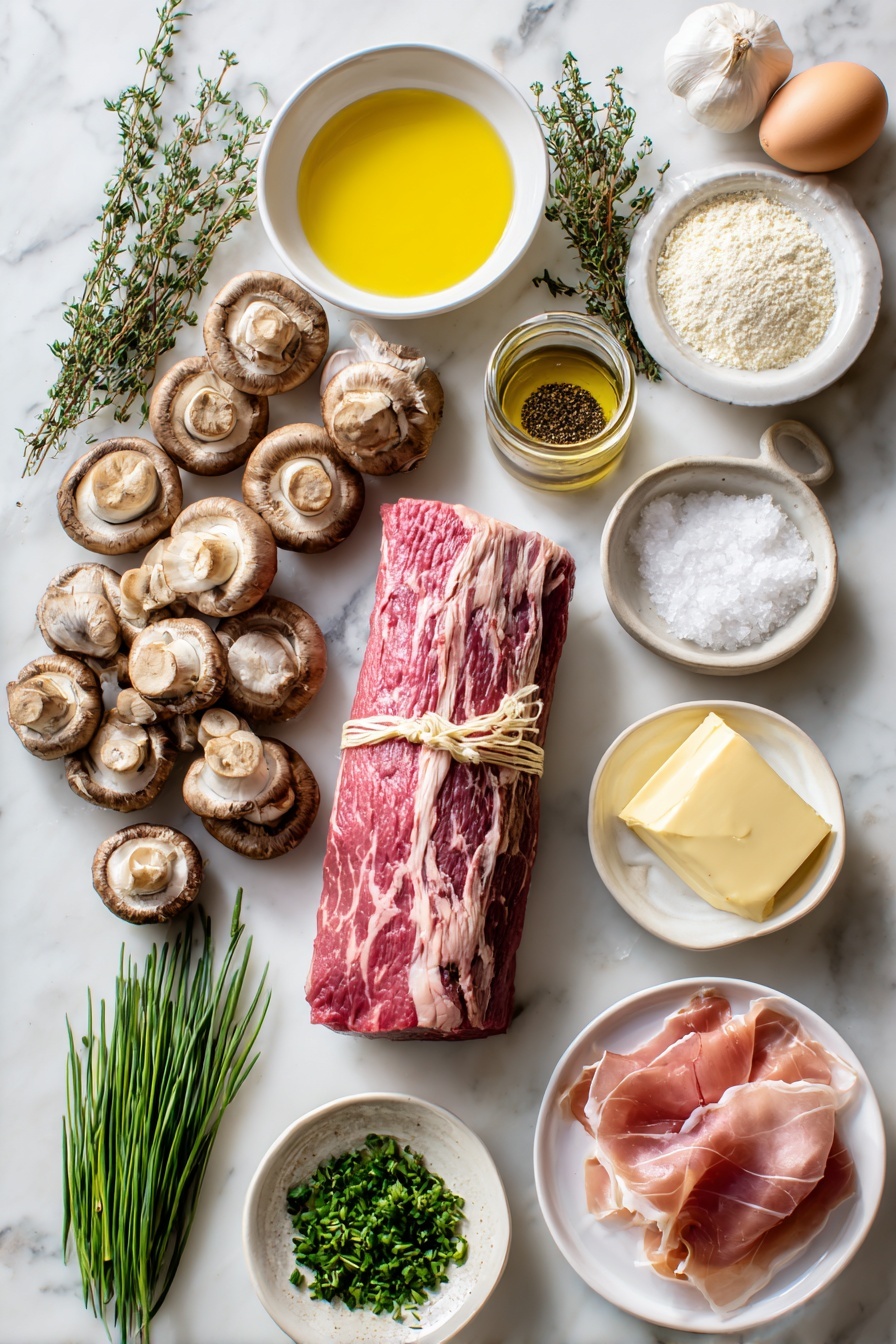
- Beef tenderloin: The star of the show, tender and lean, perfect for quick searing and roasting.
- Kosher salt and black pepper: Key for seasoning and enhancing the natural beef flavor.
- Olive oil: For a nice sear and sautéing mushrooms; helps build flavor layers.
- Dijon mustard: Adds a tangy sharpness, creating an extra flavor dimension and helps hold the duxelles to the beef.
- Mushrooms (a mix): Using a variety like button, cremini, shiitake brings earthiness and texture.
- Salted butter: For richness and helps cook down the mushrooms beautifully.
- Shallots: Sweet and mild onion flavor that blends seamlessly with mushrooms.
- Fresh thyme: Adds a subtle herbaceous note that brightens the duxelles.
- Garlic: Essential for aromatic depth.
- Prosciutto: Acts like a salty, flavorful wrapper that keeps moisture in and adds indulgence.
- Puff pastry: Flaky, buttery, and perfect for the golden outer shell.
- Egg wash: Gives the pastry that irresistible shiny, golden finish.
- Flaky sea salt: For finishing touch—adds crunch and bursts of salty flavor.
- Fresh chives: Adds freshness and a mild onion bite as garnish.
Tweak to Your Taste
One of my favorite things about this Beef Wellington Recipe is how you can make it your own without losing its classic touch. Feel free to swap ingredients or add your spin—you’ll still get that incredible, rich centerpiece.
- Variation: I’ve tried swapping out prosciutto for thin pancetta slices for a smokier note, and it works beautifully if you like a bit more punch.
- Dietary Mod: If you want to lighten things up, you can omit the butter in your duxelles and just use olive oil, though the richness will mellow slightly.
- Seasonal: Feel free to add finely chopped herbs like rosemary or sage to the mushroom mixture for an earthy winter twist.
Step-by-Step: How I Make Beef Wellington Recipe
Step 1: Prep and Sear That Tenderloin
This step really sets the tone for your Wellington. Start by trimming any silver skin and excess fat from your beef tenderloin — this keeps it tender and neat. The butcher can do this for you if you ask. Then, tie it up with butcher’s twine at 1-inch intervals; it helps keep the shape when cooking. Season it generously all over with kosher salt and freshly ground pepper—don’t be shy here, seasoning is key.
Heat a heavy skillet or cast iron over high heat until it’s just smoking. Add olive oil and sear the tenderloin on all sides, including the edges, about 2 minutes per side. Don’t fiddle with it while searing—let that crust form! After searing, remove the twine and brush the warm beef all over with Dijon mustard. It adds a lovely tang and helps the mushroom layer stick.
Step 2: Make the Flavorsome Mushroom Duxelles
I like using a food processor for this, but if you don’t have one, a sharp knife and patience works great too. Combine half your mushrooms, shallots, thyme leaves, and garlic and pulse just until finely chopped. Do the rest in a second batch to keep the texture even.
Cook the mushroom mixture in the same pan (so you keep all those flavorful bits) with butter and olive oil over medium-high heat. Stir occasionally and season with salt and pepper. You’ll cook until the mushrooms release their liquid, then continue until that moisture evaporates and they begin to brown—about 12-15 minutes total. Let this cool; it dries out the mushrooms and prevents sogginess in the puff pastry.
Step 3: Wrap it, Chill it, and Get Ready to Bake
Lay out a double layer of plastic wrap and arrange your prosciutto slices in an overlapping square big enough to hold your tenderloin. Spread the cooled duxelles evenly over the prosciutto—they’ll act like a flavorful barrier. Now place your tenderloin at one edge and use the plastic wrap to roll it up tightly, tucking in the ends. This step ensures everything stays nice and compact.
Pop the wrapped tenderloin into the fridge for at least 30 minutes to firm up—trust me, this makes the pastry wrapping much easier.
Meanwhile, preheat your oven to 425°F (218°C). Lightly floured, roll out your thawed puff pastry to a rectangle that can snugly wrap the meat. Remove the plastic wrap from your tenderloin and place it on the pastry. Wrap it up, seal the edge with beaten egg, and trim any excess dough. Brush the entire surface with egg wash to get that golden shine, score gently with diagonal slashes to release steam, and sprinkle with flaky sea salt for texture and flavor.
Step 4: Bake and Rest for Perfection
Place your Beef Wellington on a parchment-lined baking sheet and bake for about 40-45 minutes until the pastry is beautifully golden and the internal temperature of the beef reads 120-125°F (49-51°C) for medium-rare. A digital meat thermometer is your best friend here! Once out of the oven, let it rest 10 minutes—this is crucial for juicy, tender slices.
Pro Tips for Making Beef Wellington Recipe
- Use a Digital Thermometer: It’s the best way to achieve perfectly medium-rare without guessing.
- Don’t Skip Resting: Letting the Wellington rest after baking ensures juicy, tender slices rather than dry beef.
- Chilling Tightens the Roll: Wrapping the tenderloin tightly with plastic wrap and chilling helps maintain the shape and prevent soggy pastry.
- Choose Quality Puff Pastry: Freshly made or good-quality frozen puff pastry makes a huge difference in flakiness and flavor.
How to Serve Beef Wellington Recipe
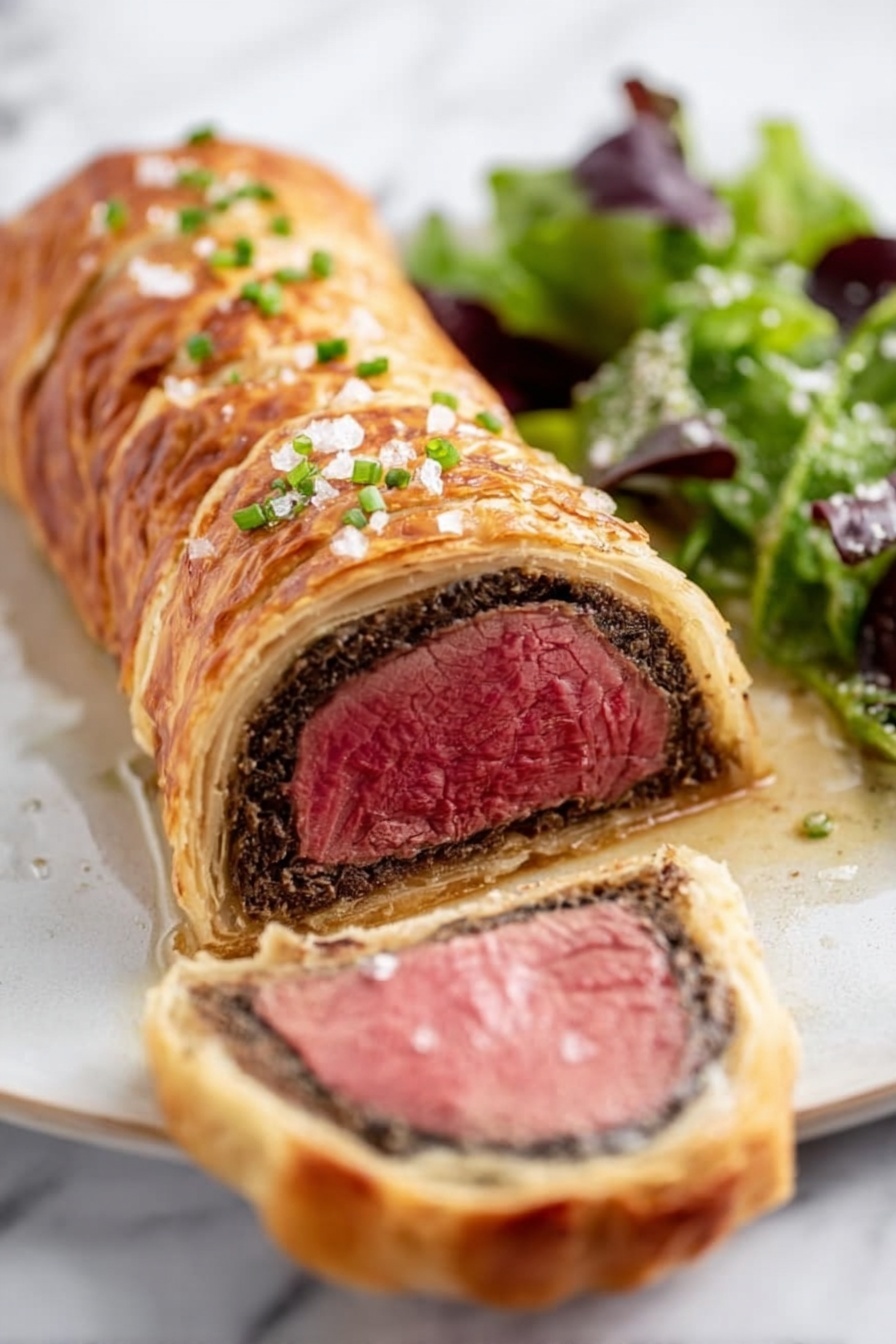
Garnishes
I love sprinkling freshly minced chives on top right after slicing — it adds a mild, fresh bite that cuts through the richness. A little extra flaky sea salt gives a nice crunch contrast and highlights the savory notes perfectly.
Side Dishes
Some of my favorite sides to serve alongside Beef Wellington include creamy mashed potatoes or a silky parsnip purée. Roasted seasonal vegetables like asparagus or green beans add color and freshness. A light red wine jus or a simple pan sauce also pairs beautifully without overpowering the main event.
Creative Ways to Present
For special occasions, I’ve wrapped individual filet portions in pastry for mini Wellingtons — perfect for plating at dinner parties. Another idea? Serve slices on a stylish platter garnished with edible flowers and fresh herbs for that wow factor. It’s a real crowd-pleaser and adds an elegant touch to your table.
Make Ahead and Storage
Storing Leftovers
Leftovers can be gently wrapped in foil or plastic wrap and stored in the fridge for up to 2 days. I find it’s best to slice just what you need when reheating to keep everything tasting fresh.
Freezing
You can freeze the assembled Wellington before baking, tightly wrapped in plastic and foil, for up to a month. Just thaw overnight in the fridge and bake as usual, adding a bit more time to ensure it’s cooked through.
Reheating
To keep the puff pastry crisp when reheating leftovers, I gently warm slices in a 350°F oven for about 10-15 minutes, rather than microwaving. This way, the beef stays juicy and pastry flaky.
FAQs
-
Can I use a different cut of beef for this Beef Wellington Recipe?
While beef tenderloin is ideal due to its tenderness and even shape, you can use other cuts like a center-cut filet mignon roast. Just keep in mind tougher cuts won’t be as tender and may need different cooking times.
-
How do I prevent the puff pastry from getting soggy?
Cooking the mushroom duxelles until dry and cooling it completely before wrapping helps a lot. Also, wrapping the tenderloin tightly in prosciutto acts as a barrier to moisture, keeping the puff pastry crisp during baking.
-
What temperature should I cook beef Wellington to for medium-rare?
A digital thermometer should read between 120-125°F (49-51°C) when you take it out of the oven. Remember, the beef will continue to carryover cook a bit while resting.
-
Can I prepare Beef Wellington ahead of time?
Yes! You can assemble the Wellington and keep it wrapped in plastic in the fridge for up to 24 hours before baking. This makes hosting much less stressful.
Final Thoughts
This Beef Wellington Recipe has become my go-to when I want to make a memorable meal that feels luxurious but isn’t overly complicated. The mix of textures and flavors makes every bite special, and once you get the steps down, you’ll see it’s totally manageable. I honestly think if I can make it, you can too — so give it a try and watch your dinner guests’ jaws drop with delight!
Print
Beef Wellington Recipe
- Prep Time: 20 minutes
- Cook Time: 1 hour 10 minutes
- Total Time: 2 hours
- Yield: 8 servings
- Category: Main Course
- Method: Baking
- Cuisine: British
Description
This classic Beef Wellington recipe features a succulent center-cut beef tenderloin wrapped in a flavorful mushroom duxelles and prosciutto, encased in golden puff pastry. Perfect for special occasions, it yields a tender, medium-rare roast with a crispy, buttery crust and savory layers of flavor.
Ingredients
Beef Tenderloin
- 2-3 pounds center-cut beef tenderloin trimmed of silverskin and fat, tied with butcher’s twine at 1-inch intervals
- Kosher salt and freshly ground black pepper, to taste (about 1 teaspoon kosher salt per pound)
- 2 tablespoons olive oil
- 2 tablespoons Dijon mustard
Duxelles
- 1 1/2 pounds mushrooms (button, cremini, shiitake, portabello, or a mix), cleaned and roughly chopped
- 2 tablespoons salted butter
- 2 tablespoons olive oil
- 2 medium shallots, roughly chopped
- 2 teaspoons fresh thyme leaves (about 6 sprigs)
- 4 cloves garlic
- Kosher salt and freshly ground black pepper, to taste
Assembly
- 12 thin slices prosciutto (about 1/4 pound)
- Flour, for rolling out puff pastry
- 14 ounces frozen or homemade puff pastry, thawed
- 1 large egg, beaten
- 1/2 teaspoon flaky or coarse sea salt such as Maldon or fleur de sel
- 1 bunch finely minced chives, for garnish
Instructions
- Prepare the tenderloin: Trim away silverskin and fat from the beef tenderloin if needed, then tie it with butcher’s twine at 1-inch intervals. Season generously all over with kosher salt and freshly ground black pepper. Heat a large skillet over high heat until smoking hot and add olive oil. Sear the tenderloin on all sides for about 2 minutes per side until well browned. Remove from pan and cut off twine. Brush all sides with Dijon mustard while the meat is still warm, then set aside to cool.
- Make the duxelles: In a food processor, combine half of the mushrooms, shallots, thyme leaves, and garlic, pulsing about 10-15 times until finely chopped. Repeat with remaining mushrooms and aromatics. Heat butter and olive oil in the skillet used for searing over medium-high heat until melted. Add mushroom mixture, season with salt and pepper, and cook, stirring occasionally, until mushrooms release their liquid and then brown, about 8-10 minutes plus an additional 4-5 minutes. Remove from heat and let cool.
- Assemble the beef Wellington: Lay out overlapping slices of prosciutto on a large piece of plastic wrap to form a square large enough to wrap the tenderloin. Spread the cooled duxelles evenly over the prosciutto. Place the tenderloin at one end and use the plastic wrap to roll tightly into a log, tucking in prosciutto ends. Twist plastic wrap ends closed and refrigerate for 30 minutes to set.
- Prepare puff pastry and wrap: Preheat oven to 425°F (218°C). Lightly flour a clean surface and roll out thawed puff pastry to a rectangle large enough to wrap the prosciutto-wrapped tenderloin. Remove plastic wrap from tenderloin and place it onto puff pastry. Roll up the pastry around the tenderloin, tucking ends underneath. Brush the long edge seam with beaten egg to seal. Trim excess pastry if necessary.
- Bake the Beef Wellington: Place wrapped tenderloin on a parchment-lined baking sheet. Brush the top with beaten egg wash. Cut diagonal slashes every inch on the pastry for steam release. Sprinkle with flaky or coarse sea salt. Bake in preheated oven for 40-45 minutes until pastry is golden brown and internal temperature of the beef reaches 120-125°F (49-51°C) for medium-rare doneness. Remove from oven and rest for 10 minutes before slicing.
- Serve: Slice into thick pieces and garnish with finely minced chives and additional flaky salt if desired. Serve immediately.
Notes
- Request your butcher to tie the tenderloin for you if not comfortable doing it yourself.
- Use a digital meat thermometer for accurate doneness; medium-rare is best for Beef Wellington.
- Ensure the mushroom duxelles is cooled completely before assembling to prevent soggy pastry.
- Chilling the prosciutto-wrapped tenderloin helps it hold shape during pastry wrapping.
- Allow the beef Wellington to rest after baking to retain juices and achieve tender slices.
- You can substitute mushrooms based on preference but avoid watery varieties to prevent soggy pastry.
- If puff pastry sheets are too small, press the edges to seal tightly or trim excess pastry after wrapping.
Nutrition
- Serving Size: 1 slice (approx. 150g)
- Calories: 550 kcal
- Sugar: 2 g
- Sodium: 700 mg
- Fat: 35 g
- Saturated Fat: 15 g
- Unsaturated Fat: 17 g
- Trans Fat: 0 g
- Carbohydrates: 30 g
- Fiber: 3 g
- Protein: 35 g
- Cholesterol: 120 mg