20-Minute Korean Beef Sesame Noodles Recipe
If you’re craving a dinner that comes together fast but bursts with flavor, you’re in for a treat with this 20-Minute Korean Beef Sesame Noodles Recipe. Seriously, it’s one of those dishes I find myself making on repeat—not just because it’s quick, but because every bite feels like a comforting hug with a spicy kick. Whether you’re new to Korean flavors or already a fan, this recipe strikes the perfect balance between savory, sweet, and nutty, making weekday dinners something to look forward to.
Why This Recipe Works
- Lightning-Fast Preparation: Ready in about 20 minutes, it’s perfect for busy weeknights.
- Balanced Flavors: The sauce combines umami, sweetness, heat, and nuttiness in perfect harmony.
- Versatile Ingredients: Easy swaps with protein and veggies allow customization to your pantry and preferences.
- Satisfying and Healthy: Brown rice noodles and fresh basil add wholesomeness without compromising taste.

Ingredients & Why They Work
Each ingredient in this 20-Minute Korean Beef Sesame Noodles Recipe plays a crucial role. From the bold garlic-ginger sauce to the nutty toasted sesame seeds, everything works together to create complex layers of flavor you didn’t expect to find in such a quick meal. When shopping, fresh produce and quality condiments really make the difference.

- Garlic: Freshly chopped garlic gives that punchy aromatic base that wakes up the sauce instantly.
- Fresh Ginger: Adds a bright, spicy zing—if you can, grate it fresh rather than using powder.
- Tamari or Soy Sauce: Tamari works great for gluten-free; it brings deep umami and saltiness.
- Honey: Balances the heat and salt with natural sweetness—feel free to adjust to taste.
- Rice Vinegar: Brings a gentle acidity that keeps the sauce lively.
- Gochujang (Korean chili paste): This is the secret superstar—a savory, spicy, slightly sweet paste that delivers authentic Korean heat.
- Toasted Sesame Oil: Offers a rich, nutty aroma that perfumes the entire dish beautifully.
- Brown Rice Noodles: They soak up the sauce wonderfully and are a heartier choice than plain pasta.
- Mixed Stir Fry Vegetables: Convenient, colorful, and add crunch—you can use whatever you have on hand.
- Shallots: I love their sweetness and milder pungency, perfect for caramelizing quickly.
- Flank Steak or Chicken Breast: Thinly sliced for fast cooking and max flavor absorption.
- Toasted Sesame Seeds: Adds delightful crunch and accentuates the sesame flavor.
- Fresh Basil: Brightens the whole plate with a fresh, herbal note—don’t skip it!
Tweak to Your Taste
I love to play around with this dish depending on mood and what’s in my fridge. You absolutely should feel free to customize this 20-Minute Korean Beef Sesame Noodles Recipe to suit your spice tolerance, favorite veggies, or protein preferences.
- Vegetarian Variation: Swap beef for extra-firm tofu or mushrooms—I’ve done this, and it’s just as satisfying.
- Spiciness Level: Adjust the gochujang amount to dial heat up or down; I usually start with 2 tablespoons and add more if I’m feeling adventurous.
- Veggie Swaps: Use any sturdy veggies you like: snap peas, bell peppers, or bok choy all work wonderfully.
- Gluten-Free: Tamari instead of soy sauce keeps it gluten-free, and brown rice noodles naturally fit the bill.
Step-by-Step: How I Make 20-Minute Korean Beef Sesame Noodles Recipe
Step 1: Whip Up That Flavor-Packed Sauce
First things first: get your sauce ready. I like using a glass jar to add all the chopped garlic, fresh ginger, tamari, honey, rice vinegar, gochujang, and toasted sesame oil. Give it a good shake or whisk it well—that’s your magic flavor base. Making the sauce ahead of time is also great; it helps the flavors meld and saves you even more time later.
Step 2: Cook Your Noodles Just Right
While the sauce is waiting, cook your brown rice noodles according to the package directions. I like to be extra careful here—don’t overcook! They should be tender but still have a bite. Once done, drain and rinse under cold water to stop cooking and prevent sticking. This little rinse step is a game changer; it keeps your noodles from turning into a mushy mess later on.
Step 3: Stir-Fry the Veggies for Crunch and Color
Heat one tablespoon of sesame oil over high heat in a large skillet. Toss in your mixed vegetables and give them a quick 2-3 minute sauté until just wilted but still vibrant. Add two tablespoons of your prepared sauce and stir to coat—the veggies soak up that sauce beautifully. Then, remove veggies from the skillet and set aside. This keeps flavors distinct and prevents overcooking.
Step 4: Sear Shallots and Meat to Perfection
In the same skillet, add another tablespoon of sesame oil. Add sliced shallots and let them soften for about 2 minutes—this step builds a lovely sweetness. Next, lay the thinly sliced flank steak or chicken in one layer and don’t stir for a couple minutes; this sears the meat and locks in juices. Toss the meat, then pour in the remainder of your sauce and let it simmer for a minute.
Step 5: Bring It All Together
Finally, stir in your cooked noodles and the sautéed veggies. Cook for another 2-3 minutes, so the sauce fully coats everything. When you take it off the heat, stir in fresh basil and toasted sesame seeds—the fresh basil adds a pop of brightness that wakes up the whole dish.
Pro Tips for Making 20-Minute Korean Beef Sesame Noodles Recipe
- Prep Sauce Ahead: Make your sauce a day ahead to let the flavors meld and save time on cook day.
- Don’t Overcrowd Your Pan: Keep the skillet hot with room to stir-fry for best searing on meat and veggies.
- Use Thinly Sliced Meat: Thin slices cook super fast and soak up all that amazing sauce flavor.
- Avoid Overcooking Noodles: Rinsing cooked noodles in cold water stops cooking and prevents mushiness.
How to Serve 20-Minute Korean Beef Sesame Noodles Recipe

Garnishes
I like to top this dish with extra toasted sesame seeds and fresh basil leaves—it adds both texture and a pop of freshness that brightens every bite. Sometimes I throw on thinly sliced green onions or a sprinkle of crushed red pepper flakes if I want a little extra heat. These simple garnishes make it look restaurant-worthy in seconds.
Side Dishes
Since the noodles are quite filling, I usually keep sides light. A crisp cucumber salad or quick kimchi pairs beautifully, bringing cool crunch and acidity to balance the rich flavors. Occasionally, I’ll whip up some steamed edamame or a simple miso soup to round out the meal.
Creative Ways to Present
For special occasions, I love serving the noodles in individual bowls topped with a lime wedge for a citrus twist. You can also make it fun by using lettuce leaves as wraps for the beef and noodles—a playful, hand-held way to enjoy these flavors. It always sparks conversation and makes the meal feel celebratory.
Make Ahead and Storage
Storing Leftovers
I store leftovers in an airtight container in the fridge, ideally within two hours of cooking. The noodles absorb more sauce overnight, becoming even more flavorful. Just be aware that the texture of the basil and some veggies softens, so I usually save fresh herbs to add after reheating.
Freezing
I don’t generally freeze this noodle dish because the noodles and fresh herbs don’t respond well to freezing—they tend to get mushy. Instead, I recommend making it fresh or packing leftovers for the next couple of days.
Reheating
To reheat, I warm leftovers gently in a skillet over medium heat with a splash of water or additional sesame oil to loosen the sauce. It revives the texture and flavor beautifully—just add fresh basil after heating to restore that vibrant punch.
FAQs
-
Can I use other types of noodles in this 20-Minute Korean Beef Sesame Noodles Recipe?
Absolutely! While brown rice noodles are delicious and soak up the sauce well, you can swap in udon, soba, or even spaghetti if needed. Just adjust cooking time according to the noodle type to avoid overcooking.
-
What if I don’t like spicy food—can I make this recipe milder?
Yes, you can reduce or omit the gochujang chili paste to lower the heat. You might want to add a little extra honey or soy sauce to keep a balanced flavor. Alternatively, try adding a pinch of smoked paprika for a mild smoky depth without the kick.
-
Can this recipe be made gluten-free?
Definitely! Use tamari instead of regular soy sauce, and ensure your gochujang is gluten-free (some brands are). Brown rice noodles are naturally gluten-free, so you’re good to go.
-
What’s the best cut of beef to use?
Flank steak is my favorite because it’s lean, flavorful, and thin slices cook quickly and stay tender. You can also use skirt steak or sirloin. Just be sure to slice across the grain for tenderness.
Final Thoughts
This 20-Minute Korean Beef Sesame Noodles Recipe has become a go-to in my kitchen for a reason. It’s fast, flavorful, and incredibly satisfying without any fuss. Honestly, whenever I whip this up, it feels like a mini celebration of simple ingredients coming together just right. I can’t wait for you to try it—you’ll see how quick family dinners can be both hearty and exciting. Give it a spin, tweak to your liking, and watch it become a staple in your home too!
Print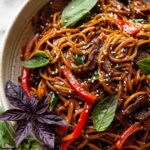
20-Minute Korean Beef Sesame Noodles Recipe
- Prep Time: 15 minutes
- Cook Time: 10 minutes
- Total Time: 25 minutes
- Yield: 4 servings
- Category: Main Course
- Method: Stovetop
- Cuisine: Korean
Description
This 20 Minute Korean Beef Sesame Noodles recipe is a quick and flavorful dish combining tender flank steak, aromatic sesame oil, and a savory-spicy sauce with brown rice noodles and fresh vegetables. Perfect for a satisfying weeknight dinner that comes together in under half an hour.
Ingredients
Sauce
- 4 cloves garlic chopped
- 1 tablespoon chopped fresh ginger
- 1/2 cup tamari or soy sauce
- 1/4 cup honey
- 2 tablespoons rice vinegar
- 3 tablespoons Gochujang (Korean chili paste)
- 1 tablespoon toasted sesame oil
Stir Fry
- 8 ounces brown rice noodles
- 2 tablespoons sesame oil
- 3 cups mixed stir fry vegetables
- 3 shallots, sliced
- 1 pound flank steak or chicken breast, sliced thin
- 1/4 cup toasted sesame seeds
- 1/2 cup fresh basil
Instructions
- Make the sauce: Combine garlic, ginger, tamari or soy sauce, honey, rice vinegar, Gochujang, and toasted sesame oil in a glass jar. Shake or whisk until thoroughly combined to make a spicy, flavorful sauce.
- Prepare noodles: Cook the brown rice noodles according to the package directions until tender. Drain and rinse under cold water to stop further cooking and prevent sticking.
- Cook vegetables: Heat 1 tablespoon of sesame oil in a large skillet over high heat. Add the mixed stir fry vegetables and cook, stirring occasionally, until wilted, about 2 to 3 minutes. Stir in 2 tablespoons of the prepared sauce to coat the veggies evenly. Remove the vegetables from the skillet and set aside.
- Sear shallots and meat: In the same skillet, heat the remaining 1 tablespoon of sesame oil. Add the sliced shallots and cook for 2 minutes until they are deeply softened. Add the thinly sliced flank steak and cook undisturbed for 2 minutes to sear. Toss the meat, then pour in the remaining sauce and simmer for 1 minute to absorb the flavors.
- Combine and finish: Add the cooked noodles and the sautéed vegetables back to the skillet. Cook, stirring frequently, for 2 to 3 minutes until the sauce coats everything evenly and the dish is heated through.
- Serve: Remove from heat, stir in fresh basil and toasted sesame seeds. Serve immediately, garnished with extra fresh basil if desired.
Notes
- Use tamari for a gluten-free alternative to soy sauce.
- Adjust Gochujang quantity based on your preferred spice level.
- Substitute flank steak with chicken breast or tofu for different protein options.
- Brown rice noodles can be swapped with rice vermicelli or soba noodles.
- Include any favorite stir fry vegetables like bell peppers, snap peas, or carrots.
- Make sure to slice the meat thinly for quick and even cooking.
Nutrition
- Serving Size: 1 serving
- Calories: 450 kcal
- Sugar: 12 g
- Sodium: 900 mg
- Fat: 15 g
- Saturated Fat: 3 g
- Unsaturated Fat: 10 g
- Trans Fat: 0 g
- Carbohydrates: 48 g
- Fiber: 5 g
- Protein: 30 g
- Cholesterol: 60 mg
![Hearty Red Lentil Stew [Stove, Crockpot, Instant Pot] Recipe](https://platehaven.com/wp-content/uploads/2025/09/0_1-1757206364637-768x960.jpeg)